
Price County Court Record Requests
Filed documents and proceeding records for regular circuit matters sit with the Price County Clerk of Circuit Court. Before contacting anyone, pull up WCCA and note the case number, caption, case type, and the activity you care about. Treat WCCA as an index and activity service. It does not store filed images for the public.
- Search WCCA and write down the Price County case number.
- Identify the exact complaint, motion, order, judgment, or hearing date.
- Call the clerk to confirm public access, page count, cost, and delivery options.
- Inspect the record at the Room 206 counter or ask whether a narrow mail request is accepted.
- State whether a plain or certified copy is needed, then follow current payment directions.
You can reach the records desk by phone or at the counter in person. The county directory lists an email address and a fax number too. Neither one is promised to accept copy orders, so check before you send anything. A mailed request works best with full details. Include your contact information, the case number, and the exact document and its date. Name the copy type, say how you want it delivered, and ask for the total price. The office publishes no official turnaround time or postage schedule. Ask the clerk directly about timing.
Price County Room 206 Records Desk
Lisa Walcisak is the elected Clerk of Circuit Court. Deputies Amy Walker, Wendy Creley, and Alexis Kertzman round out the staff. This is a working records and payment unit. It is not just a help desk for the online portal. Staff can arrange file inspection and plain and certified copies. They can explain confusing WCCA activity and route transcript requests. They cannot give legal advice. Deciding which document serves a legal need stays with you.
Price County Clerk of Circuit Court
Price County Courthouse, Room 206
126 Cherry Street, Phillips, WI 54555-1249
715-339-2353
Fax: 715-339-5114
Monday-Friday, 8:00 a.m.-4:30 p.m.; holidays closed
Probate matters and juvenile matters take a different path. Those files route to the Register in Probate and the Clerk of Juvenile Court. Access rules there can differ sharply from circuit court practice, so a case that shows in WCCA does not mean every related probate or juvenile document is open to you.
Kinds of Court Records
Think of a docket as a chronological map of case activity. The file behind it can hold the documents that actually answer your question. Ask for the narrow item you need. Requesting everything slows identification and can pull in material the clerk cannot lawfully hand out.
- Complaints, petitions, answers, and other public pleadings
- Motions, briefs, affidavits, and filed exhibits when accessible
- Orders, judgments, and disposition records
- Docket or case-activity printouts
- Transcripts produced by the court reporter
- Certified copies carrying the clerk's attestation
Transcripts from proceedings before Judge Mark T. Fuhr go through the clerk. The court reporter requires prepayment. When you call, ask about the hearing date and the type of proceeding. Also ask about reporter availability, the estimated size and cost, and how the finished transcript will reach you. A transcript is not a docket printout. It is a word-for-word record prepared after the fact. Price County publishes no transcript rate or delivery promise. Get the quote in writing before you pay.
Price County WCCA File Boundary
The Wisconsin circuit eFiling FAQ draws a line between party access and public access. Parties can view eFiled documents through their own accounts. For the public, document and transcript inspection generally runs through the county clerk, and the official FAQ spells out that split.
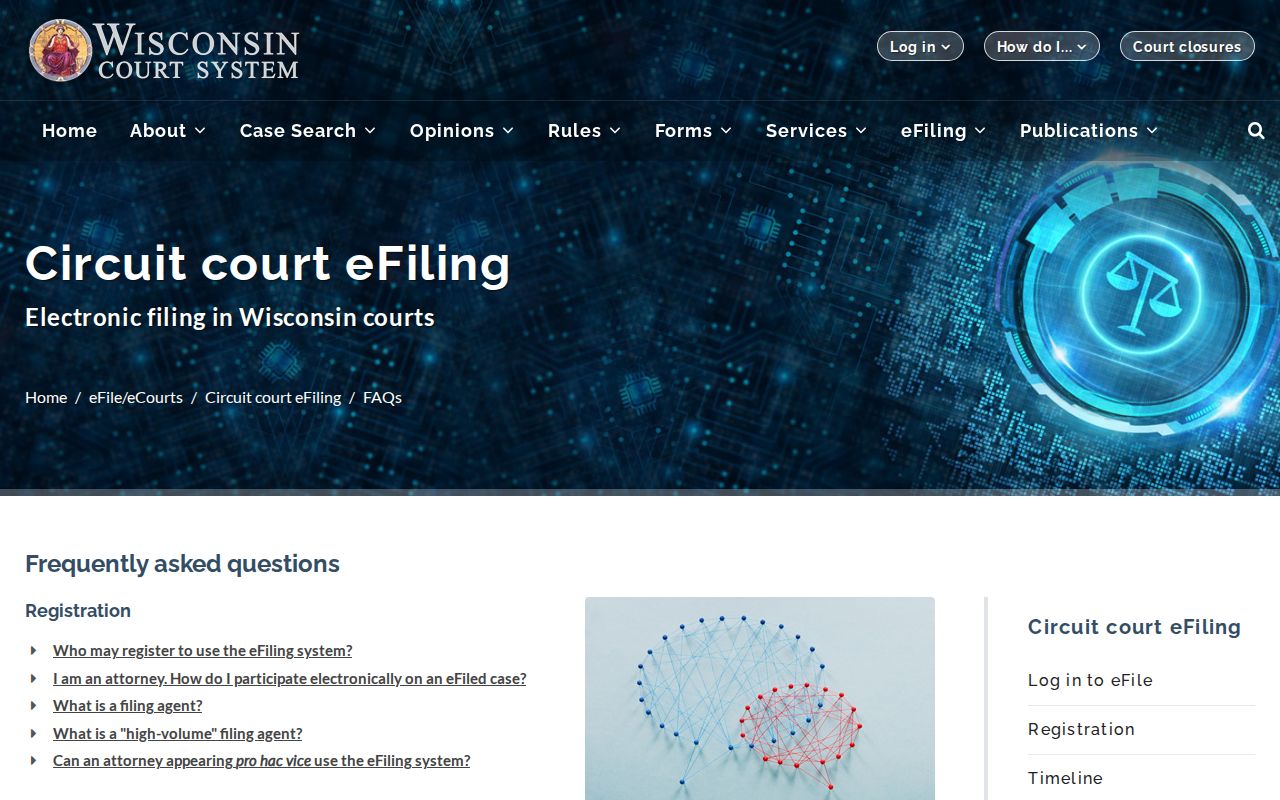
That boundary has a visible effect. WCCA can show a Documents tab or a filing title with no image attached. The public search maps the case. Room 206 remains the practical route to the file you can actually see. The Wisconsin Circuit Court eFiling system exists for filing and party access. It is not a public document warehouse.
Useful distinction: WCCA identifies the case and activity; the Price County clerk supplies accessible court documents and certified copies.
Court Records: What They Contain
What is inside a court record depends on the case type. A public file may hold the caption, party roles, filed dates, case type and class, activity entries, charges or claims, hearing notices, decisions, judgments, and payment entries. Read each part with its limits in mind. A complaint states allegations, nothing more. A charge is not a finding of guilt. A hearing notice is just a setting, and a receivable is not necessarily the final result.
| Case number | The Price County file identifier used for search and requests. |
|---|---|
| Caption and roles | The case title and roles such as plaintiff, defendant, petitioner, or respondent. |
| Filed documents | Pleadings, motions, orders, and other items, subject to access rules. |
| Activities | Dated case events; the list may not explain a ruling in full. |
| Judgment or disposition | The recorded result, best checked against the signed order. |
| Protected portions | Information masked, withheld, or sealed by law or court order. |
Run the Price County docket search first to get the case number before you order anything. Then pin down the exact dated item you need. That way you avoid paying for pages that never answer the question.
Price County Certified Copy Choice
A plain copy simply reproduces an accessible document. A certified copy carries the clerk's certification, and recipients often demand it as official proof of a judgment, order, or disposition. You must decide which one the receiving office requires. The clerk can explain the copy types on offer but cannot advise which one fits a legal purpose. Be clear about one more split. Paying online does not create a certified record. Wisconsin's state payment instructions cover citation and court-debt payment, not document certification.
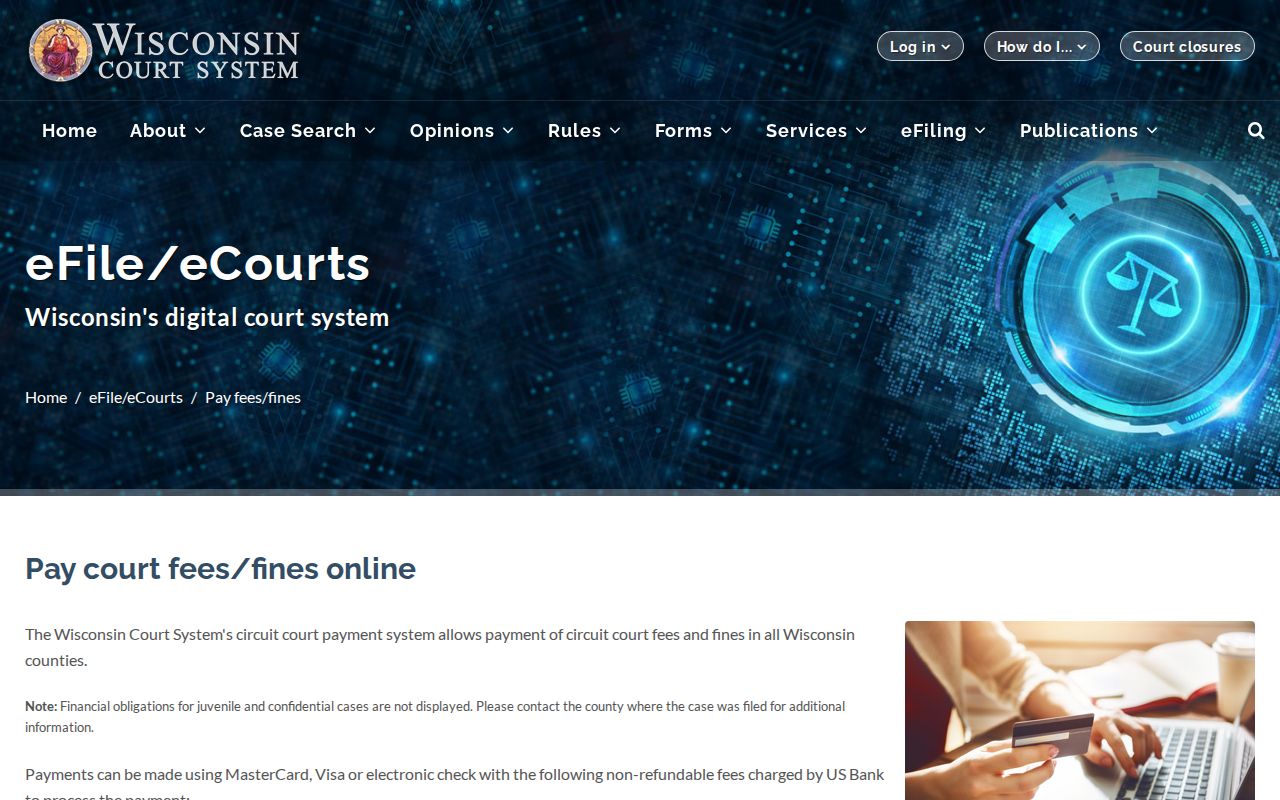
Paying an obligation and ordering proof are two separate errands at the Price County clerk. Keep your payment receipt. Then ask whether you need a certified satisfaction, judgment, or disposition. The county offers no local court-copy checkout page. That order goes through the clerk.
Copy Fees and Certification
Published figures live in the current Wisconsin circuit fee chart. Fees can change, and mailing, special service, or transcript work may need a local quote. Confirm the document, the page count, and the total before any money leaves your hands.
| Price County record item | Published amount | Verification point |
|---|---|---|
| Ordinary clerk copy | $1.25 per page | Confirm pages and delivery |
| Certified clerk copy | $5 plus $1.25 per page | Ask which certification is required |
| Listed docket, judgment, transcript, lien, or warrant item | $5 | Ask which fee line applies |
| Probate ordinary copy | $1 per page | Separate register rate |
| Probate certified copy | $3 plus $1 per page | Verify with register office |
The $35 circuit eFiling fee applies per case per party, with listed exceptions. It is not a fee for searching WCCA. The ordinary public search on WCCA is free. Transcript production costs run separately and depend on reporter prepayment. Note: Ask Price County staff for a current total. The state chart does not set local postage or transcript rates.
Price County Sheriff Form Boundary
Price County gives you a general open-records page. Its CivicPlus form can handle county records work. One catch: the form itself is labeled for the Sheriff's Office. It is not a request channel for the Clerk of Circuit Court. Incident files from law enforcement go to the agency that made them. Think police reports, photos, or agency video. Complaints, motions, judgments, transcripts, and other docket activity belong with the court's own record keeper.
Sending a court filing request to the sheriff just slows things down. Keep general county payment terms separate from WCCA fees too. When material spans both an incident and a court case, file two narrow requests with the right offices. Note the Price County case number so you can link them in your own files.
Access Rules for Court Records
Wisconsin leans toward open access, but confidentiality rules still govern sealed files and protected data. The Wisconsin Court System redaction FAQ notes that WCCA can display case information while the courthouse itself may be required for documents. That official page spells out the details.
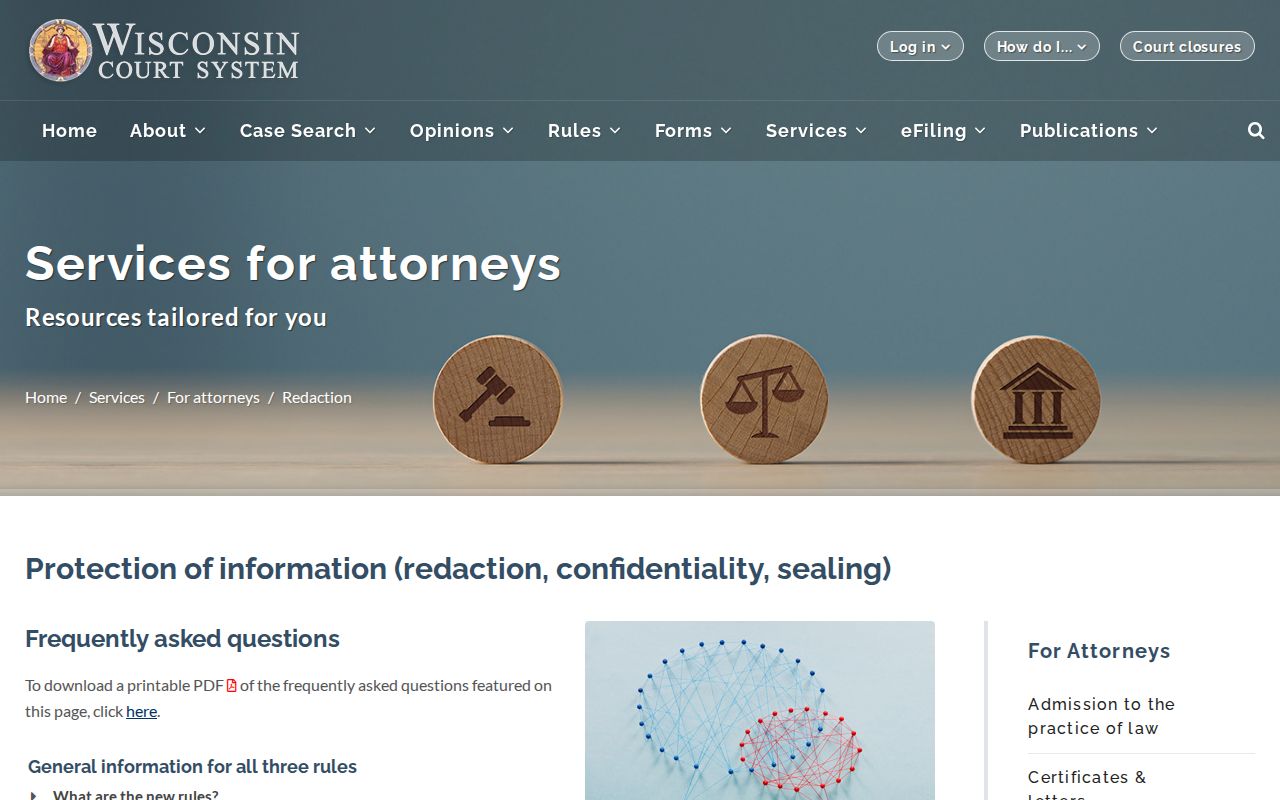
What counts as protected? Social Security and account numbers come first. So do certain victim and witness details, juror information, protected addresses, and most full birth dates. Juvenile, family, probate, identity-theft, and sealed records may need separate handling. They sit apart from an ordinary court docket lookup. Text that seems missing from a filing is often a lawful redaction, not a glitch.
Wisconsin access rules:
Wis. Stat. §19.35 states the public-records access framework.
Wis. Stat. §801.19 governs protected court-record information.
Wis. Stat. §801.20 addresses confidential court records, while §801.21 sets sealing procedure.
Only a court can seal or unseal a Price County file. The clerk has no independent power to do it. Ask the clerk for the public portion and for any accessible order explaining the restriction. If access is denied under the public-records framework, the denial should state its basis. Review procedures sit in Wis. Stat. §19.37.
Price County Transcript Records
A transcript is a word-for-word account of a proceeding. It is not the WCCA activity list, and it is not an audio file. For Judge Fuhr proceedings, Price County routes requests through the circuit clerk. The court reporter wants prepayment. Give the case number, the hearing date, and the type of proceeding. Then ask whether a transcript exists. Ask who reported it, the estimated page count and price, and how it can be delivered.
No local transcript rate, electronic-format rule, turnaround promise, or audio-retention schedule is published. Get a quote in advance. A docket entry can point you to the hearing. It cannot reproduce testimony or an oral ruling. If you only need proof of the court's final action, ask whether a certified order or judgment would do the job for less. Staff can explain what records exist and what they cost. The choice of document stays with you.